
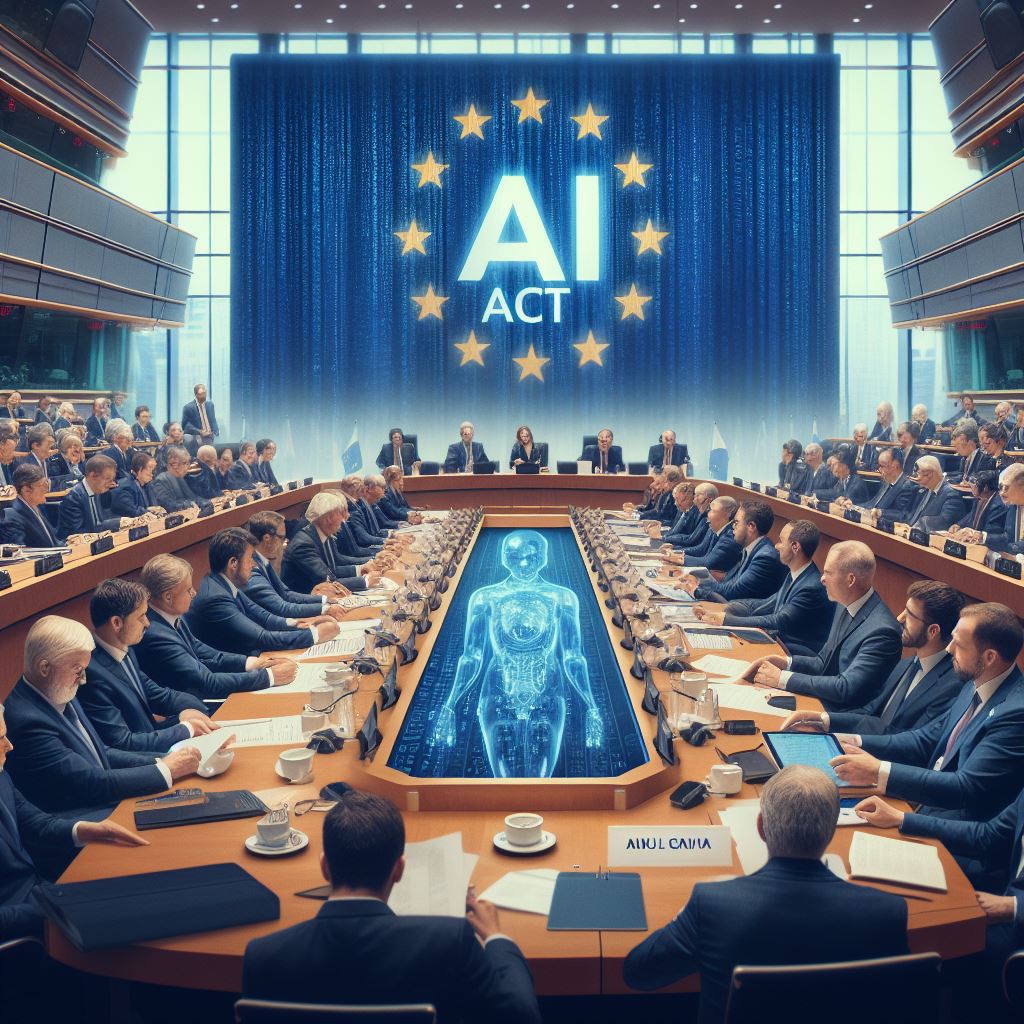
The AI Act, which is the first comprehensive AI law in the world, has been provisionally agreed upon by the European Parliament and the Council of the EU after three days of deliberations.
The law will determine what companies can and cannot do with AI, and different rules will apply to different types of AI systems. The EU has based the new system on the level of risk of AI systems. If the AI poses a limited risk, it is sufficient to indicate that the results are generated by AI. This provides more transparency. However, if the AI is classified as high risk, there are additional measures to ensure that they do not violate fundamental rights. These systems may be adopted in the EU but must meet many requirements and obligations. In this respect, the EU has taken into account the fact that these requirements must of course be technologically feasible.
The AI Act prohibits some AI applications that pose a great risk. These include systems that take photos of your face from the internet to use in their applications. The systems may also not recognize emotions at work or school. Social scoring, in which you get a higher score if you behave better, is also banned. Finally, categorization based on sexual orientation or religion is also prohibited. Companies that do not comply will have to pay either a pre-determined amount or a percentage of their turnover in the previous year, whichever is higher. The fines can amount to 35 million euros or 7% of global turnover.
This legislation contains an exception for the police: if they use a system only for police purposes, they are allowed to do so. There are also a few exceptions to this, so that fundamental rights will not be affected. The law does not apply to systems only used for research and development.
The law will now be submitted to the European Parliament for a vote on the law. The agreement states that the AI Act must be valid two years after it is adopted. This will therefore probably be in 2025.
In conclusion, the AI Act is an important law that will regulate the development and use of AI in Europe. The law is intended to ensure that AI is used safely and ethically and that it is not used to violate fundamental rights.